
When we announced the competition for a chicken coop, we did not expect that such a small task would open up such a broad architectural field. A theme that at first glance seemed almost marginal attracted an exceptional international response and demonstrated that it is often precisely in the smallest programs that the relationship between idea, construction, landscape, and everyday life can be examined most clearly. The chicken coop proved to be a surprisingly precise architectural problem: small enough not to tolerate empty gestures, and concrete enough to require authors to take a clear position on animals, space, materials, protection, microclimate, and construction.
By the deadline, February 21, 2026, 226 projects had been submitted from around the world. Among them were many exceptionally high-quality solutions which, through their inventiveness, seriousness, and sensitivity to small scale, exceeded all expectations of the organizers and the jury. The competition showed that a chicken coop is not merely an auxiliary agricultural structure, but can become a carefully considered architectural response to the question of how we build for other living beings—and, in doing so, how we understand ourselves.
The jury consisted of MAGNUS WÅGE (Mestres Wåge Architects), IVA SMRKE (Herzog & de Meuron), KLARA ZALOKAR (Studio Moste), GAŠPER FABIJAN, and MATEVŽ GRANDA.
The evaluation took place over three sessions. In the first session, the jury reviewed all 226 submitted projects and selected a shortlist of 15 projects, along with an extended selection of 34 projects that stood out for the clarity of their concepts, architectural quality, and inventiveness of approach. Already at this stage, it became clear that the competition did not produce a single typological answer, but rather an exceptionally diverse spectrum of approaches.
The projects could be broadly categorized into several groups: from lightweight, mobile structures that allow movement across space, to simple wooden constructions rooted in the tradition of agricultural buildings; from earth-based architectures (rammed earth, clay) emphasizing local materials and microclimate, to larger complexes that understand the chicken coop as part of a broader system of living and working; as well as solutions referencing the typology of the hayrack or other characteristic regional structures. This diversity was one of the key qualities of the competition.
In the second session, each jury member selected their top three projects. In the evaluation, particular attention was given to several aspects: the welfare of the chickens (light, shelter, ventilation, orientation), architectural expression, clarity of use, ease of cleaning and maintenance, integration into context, and above all the feasibility of construction within the framework of a summer workshop.
In the third and final session, the jury formed the final selection of awarded projects based on all evaluations. The discussion confirmed that the overall level of the submitted works was exceptionally high. Many projects demonstrated mature architectural thinking; however, due to the limited number of awards, many high-quality proposals did not make it into the final selection, even though their merits might well have justified it.
The selected awarded projects represent the diversity of approaches that the competition opened up—from rational and clearly executable solutions to more exploratory and conceptual interpretations of the chicken coop as an architectural object.
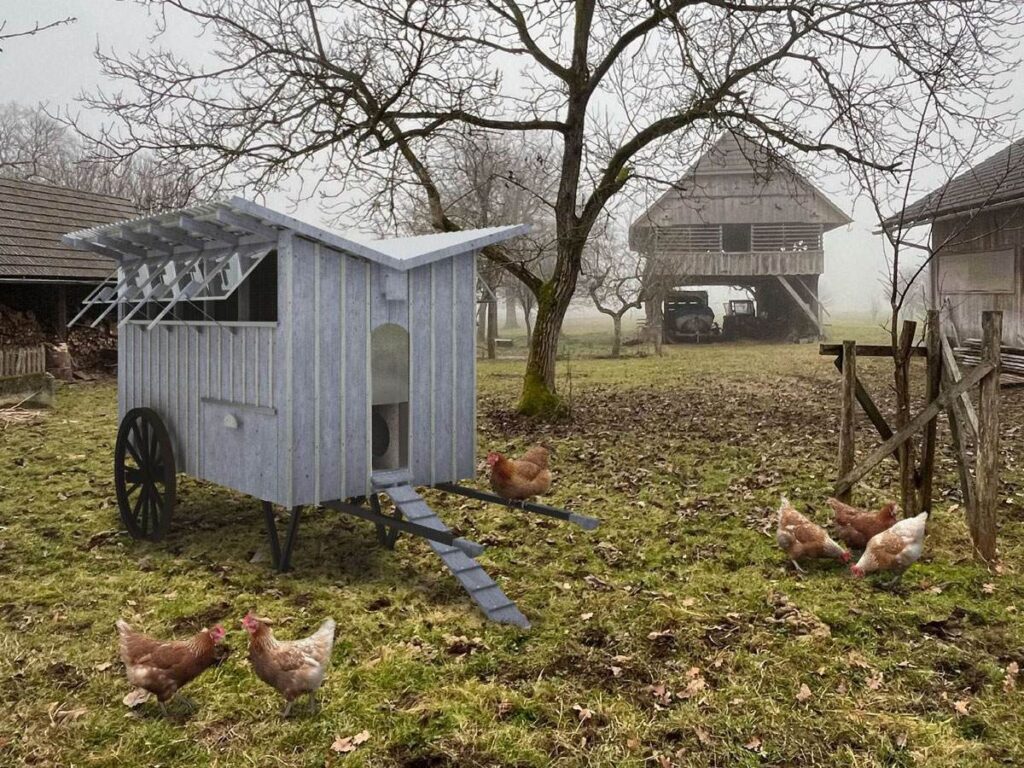
1. AWARD: 226289, AUTHOR: GERRIT MÜLLER-SCHEESSEL
The first-prize-winning project convinces with an exceptional balance between architectural idea, usability, and feasibility. The lightweight, mobile wooden structure allows the chicken coop to be moved across the site, thereby reducing its impact on the ground and enabling adaptation to different conditions. The design is clear, rational, and at the same time spatially well considered: it enables good ventilation, easy cleaning, and shelter for the chickens. What is particularly compelling is the project’s ability to translate very simple means into an architecturally distinctive object with a clear character. The project combines an archetypally legible form with a precise contemporary execution and operates as a coherent, mature, and immediately realizable solution. It is precisely in this restrained clarity that the jury recognized its greatest strength.
2. AWARD: 252136, AUTHORS: VITOR KAMAYURA, VALENTINA JOZINOVIĆ, BEATRIZ INNOCENZI DE SIMONE
The project, awarded the second prize, stands out for its strong material and spatial consistency. The henhouse is conceived as a piece of micro-architecture made of rammed earth, in which structure, climatic performance, and use operate as a unified system. The thick walls store heat, protect against wind, and simultaneously integrate nesting spaces, perches, and cleaning elements within their mass. The project establishes a clear relationship between human and animal, enabling care without unnecessary intrusion into the hens’ space. It is a restrained yet powerful architectural gesture, closely connected to the context, material, and the exploratory spirit of the site.
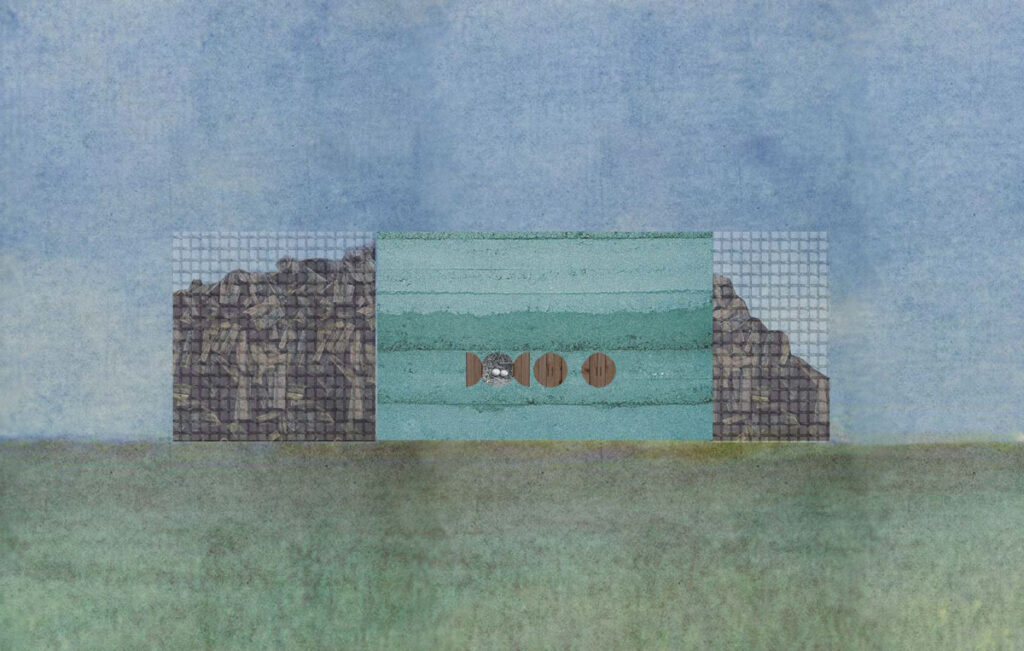
3. AWARD: 520940, AUTHORS: ZIHAO ZHOU(PATHINK ARCHITECTURE), XING SHEN
The third-prize project, Ten-feather Cottage, convinced the jury with its exceptionally comprehensive and almost typological approach to the henhouse. Rather than proposing a simple shelter, it establishes a small system in which living, feeding, cleaning, and maintenance are carefully organized into a unified structure. Its key quality lies in the central working core, which enables care without entering the hens’ space, thereby reducing animal stress and improving the user experience. The construction is rational, timber-based, and feasible, while also being spatially rich. The project stands out for its clear understanding of everyday routines and its ability to translate functional complexity into convincing and legible architecture.

HONORARY MENTIONS:
880468, Author: Gabriele Toneguzzi
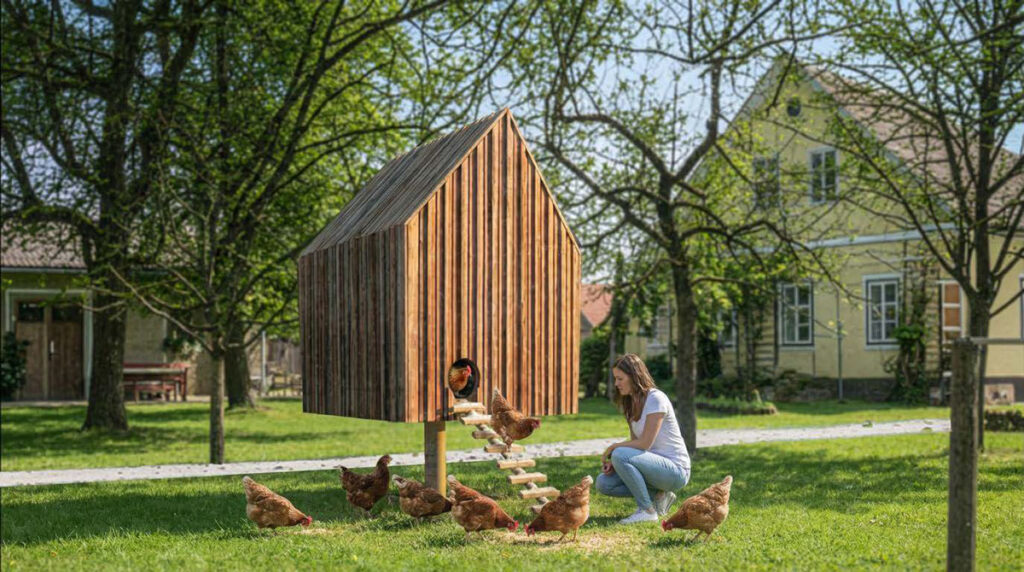
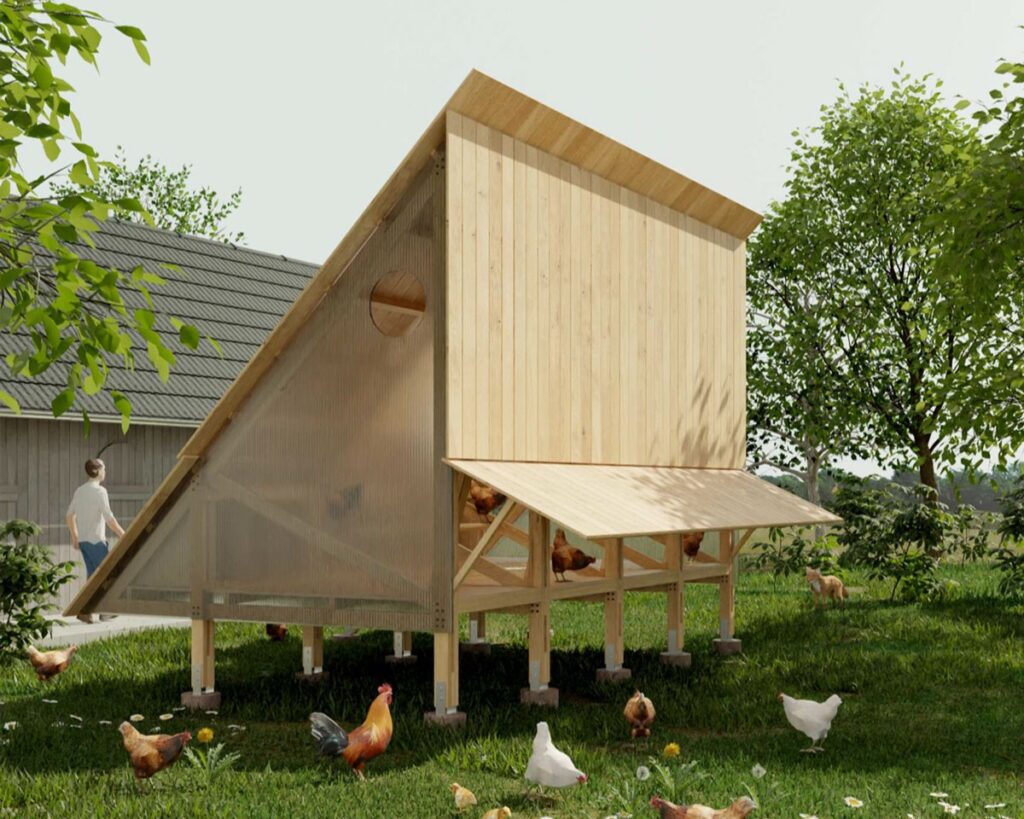
858090, Authors: Nika Jeromel, Nika Bronić
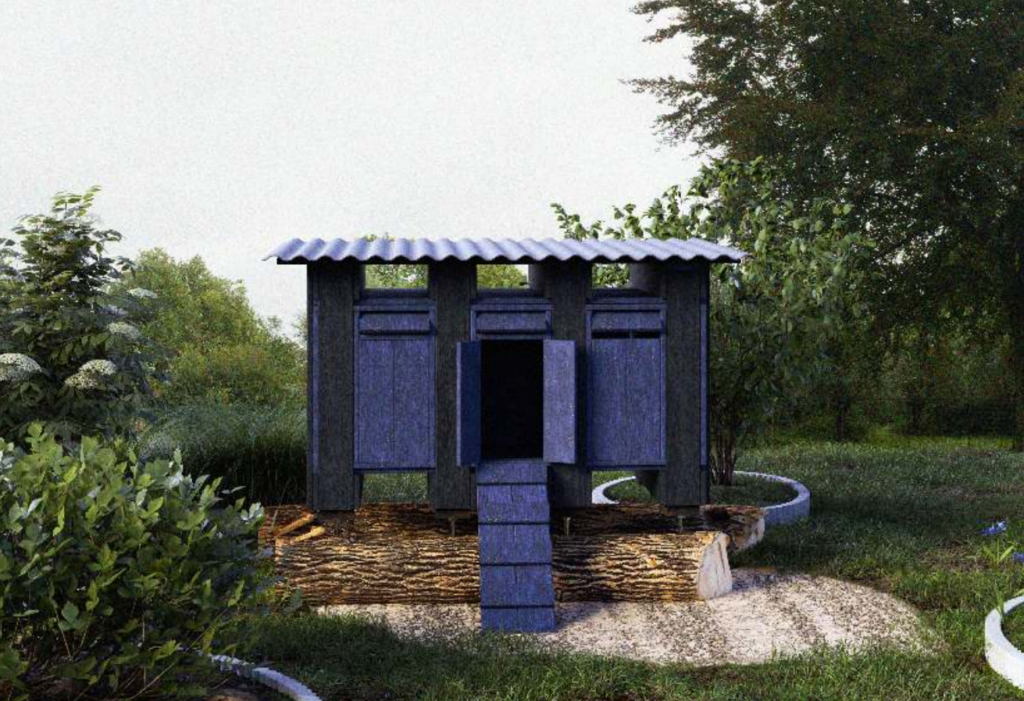
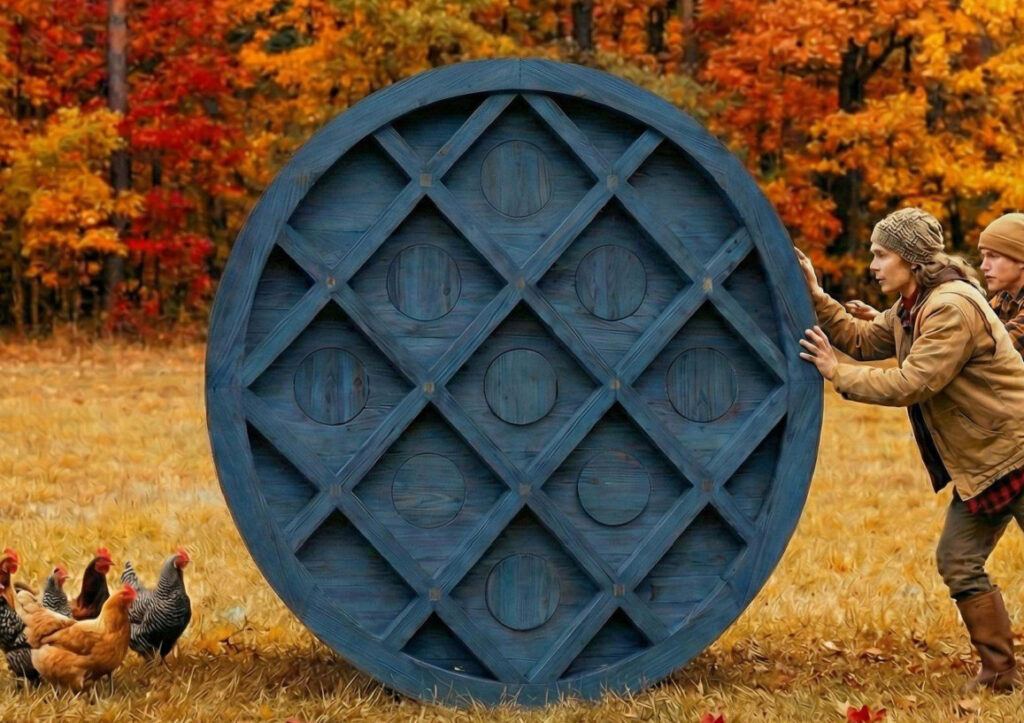
707413, Authors: Lara Pirih in Luka Čepin
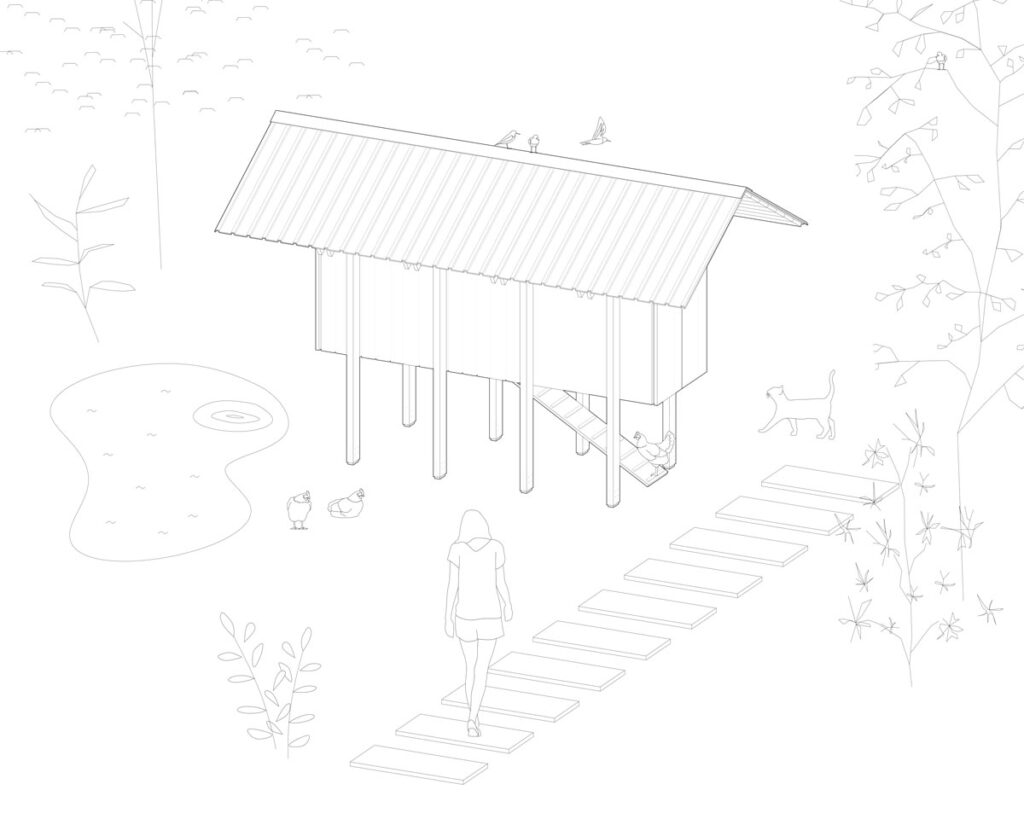
051753, Authors: Luisa Fiedler, Marco Schneider in Leonhard Ruchholtz
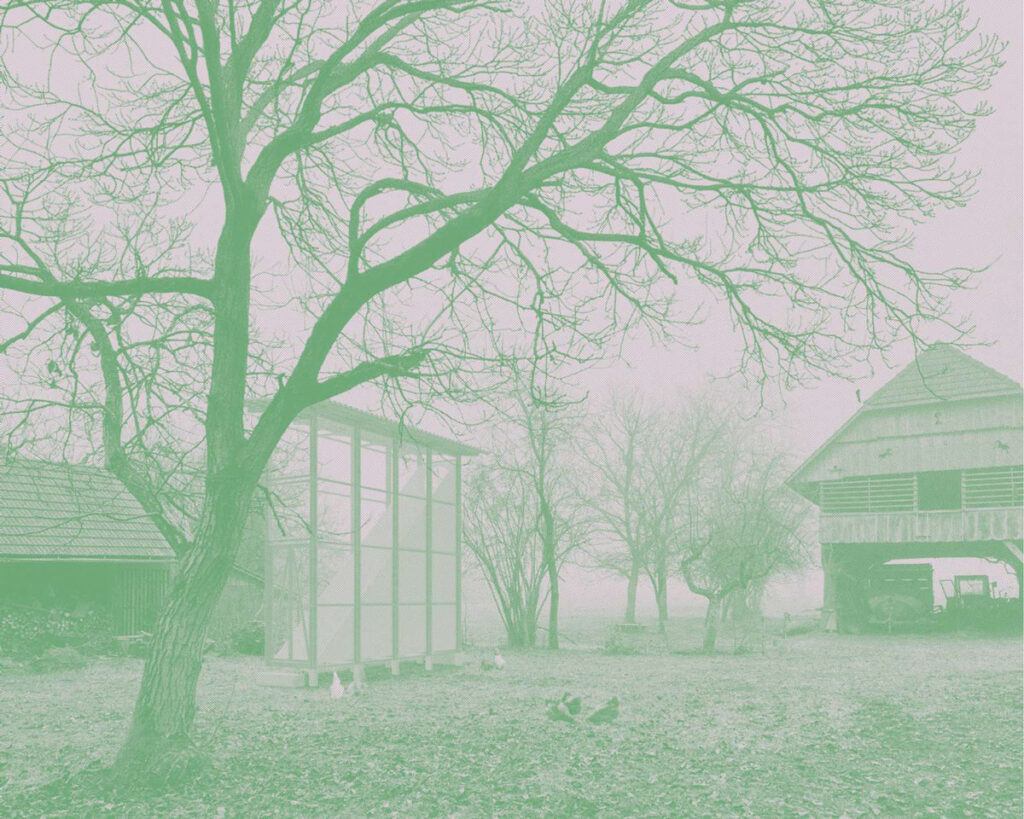
451734, Authors: Nadej Rešek in Olga Ushakova
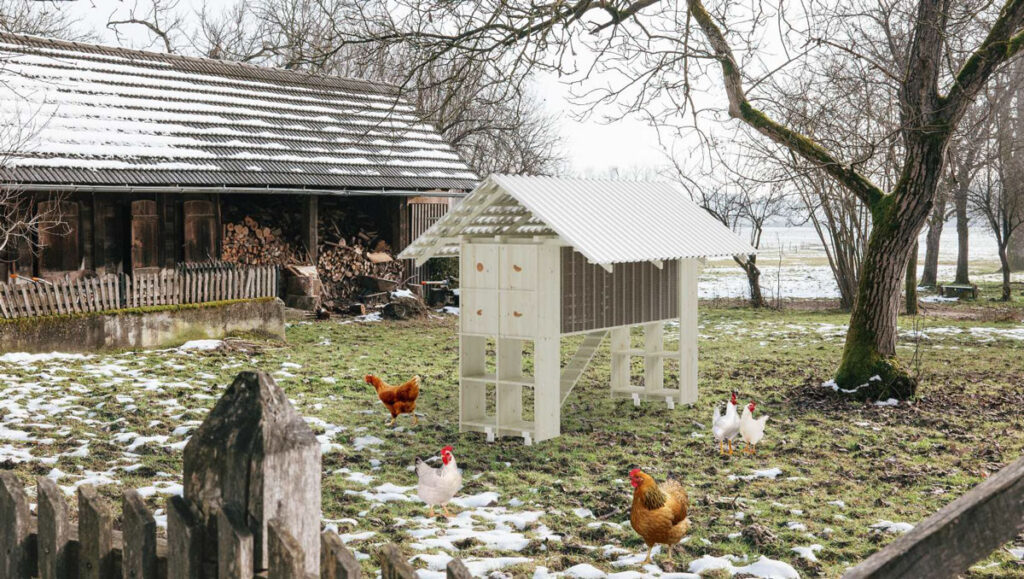
166034, Authors: Zala Legat in Sara Martinšek
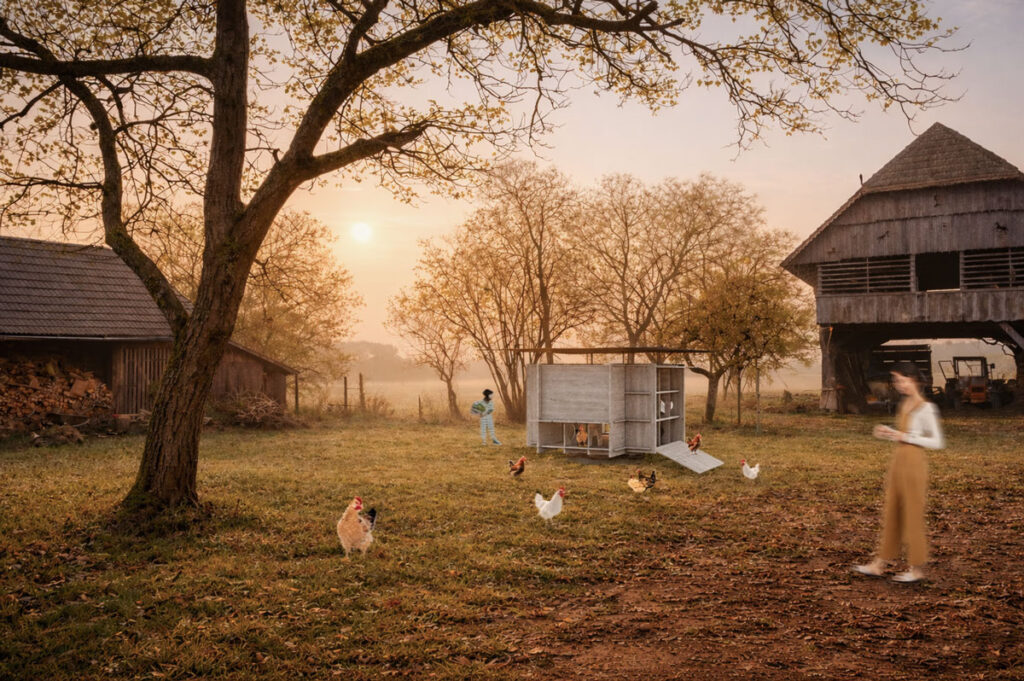
194267, Authors: Lorenz Krisai Architects
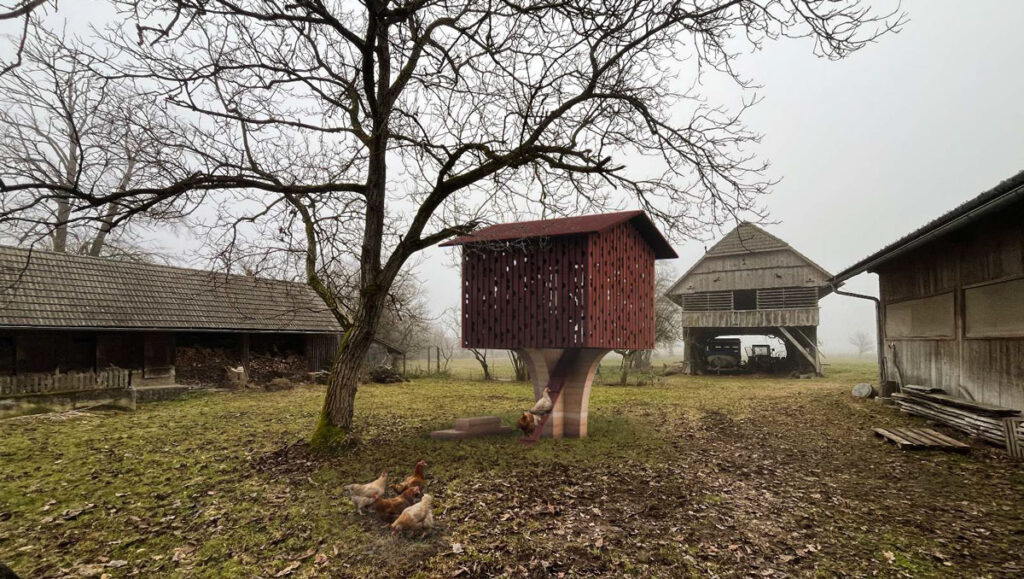
717171, Authors: Lilia Spickschen in Elisabeth Otte
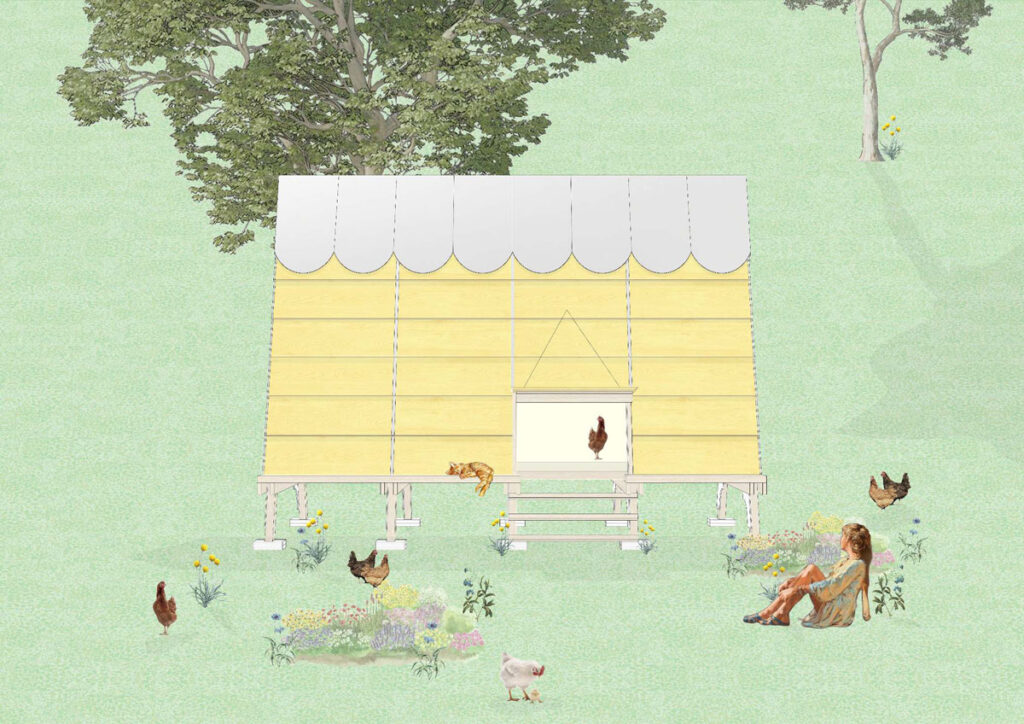
582405, Authors: Julian Liang in Courtney Cheng
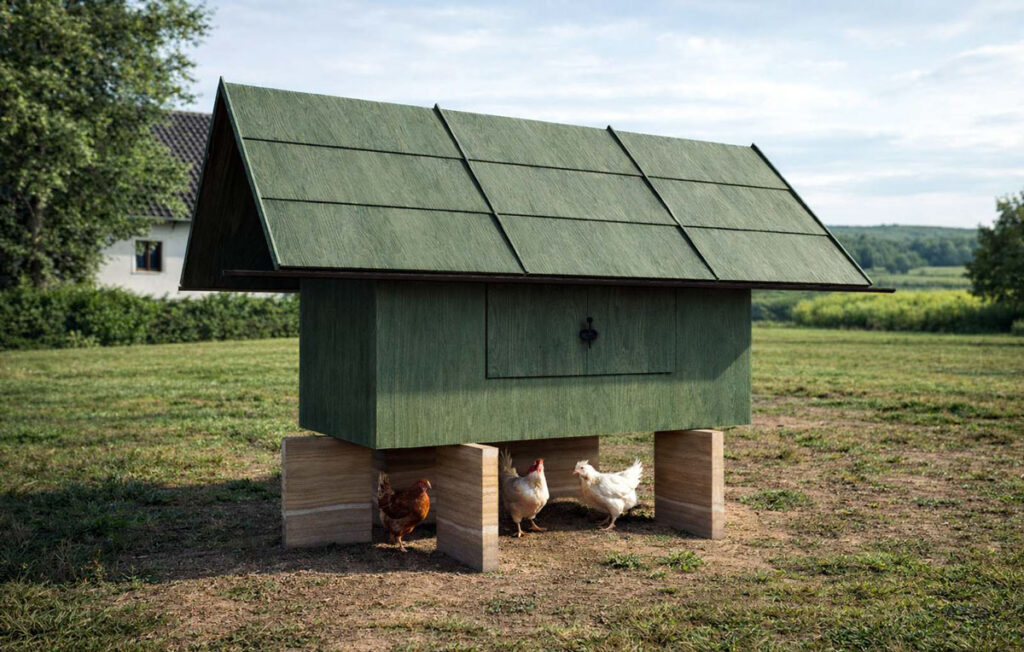
463719, Authors: Camilla Cormanni in Leonardo Francesco Franzini
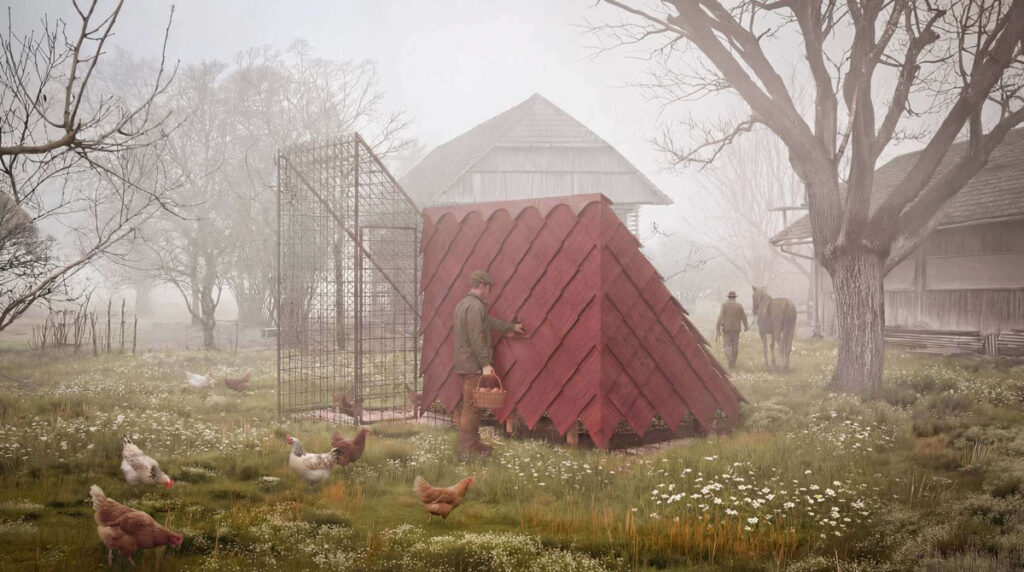
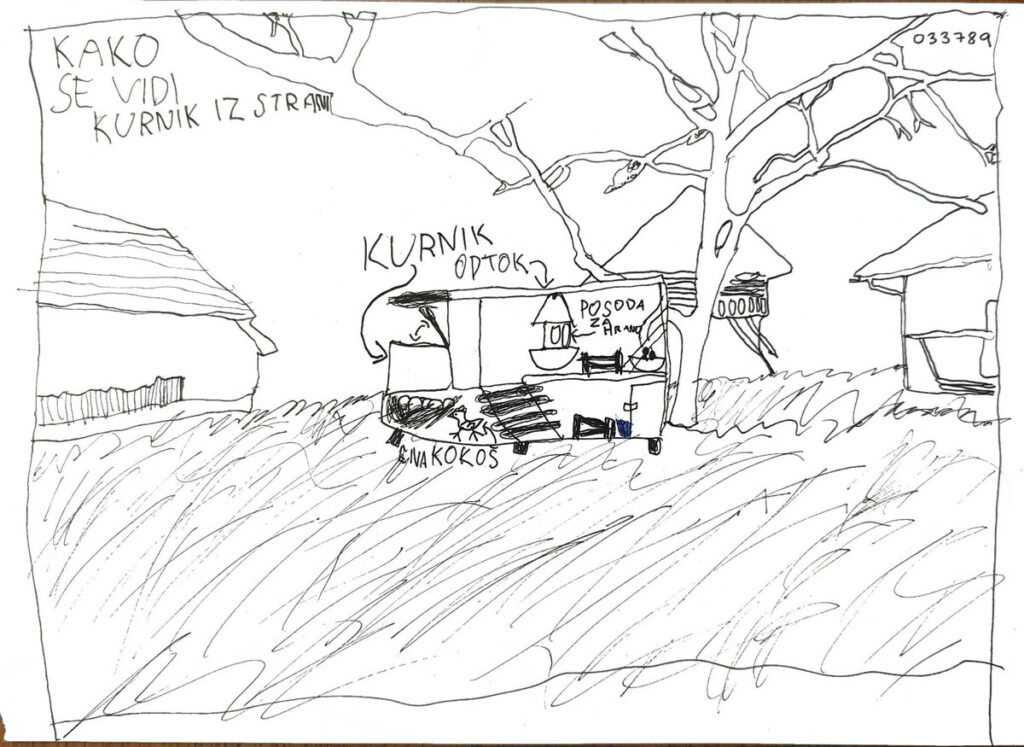
033789, Author: Jakob Sekirnik
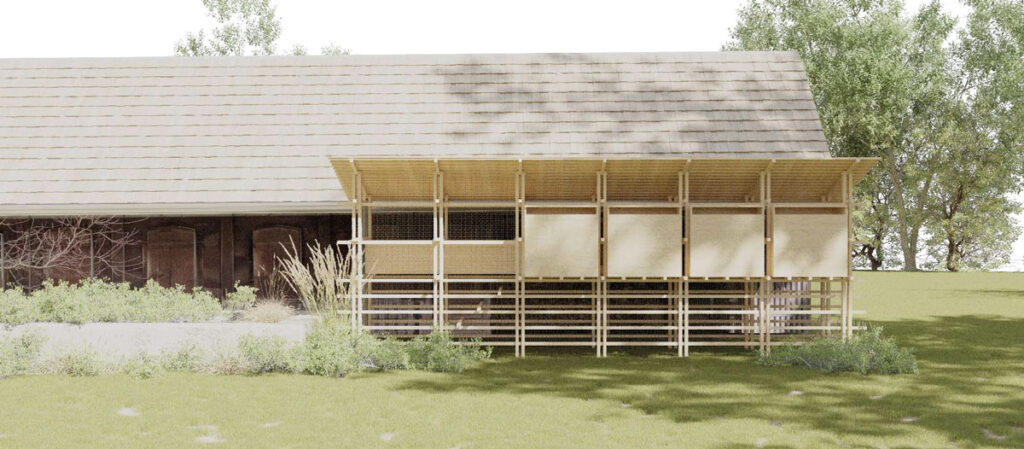
126898, Authors: Noel Ambrožič, Bor Bauman in Kimi Krapež
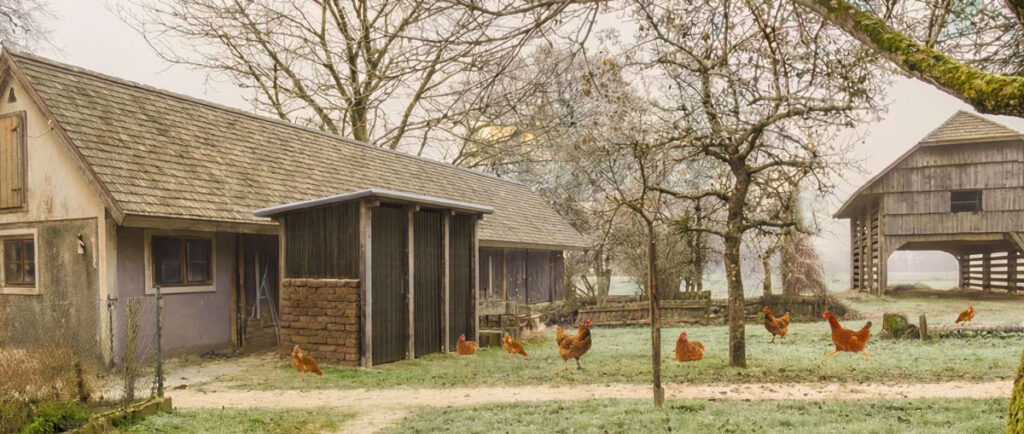
081231, Authors: Matevž Dražumerič, Nina Povše
339692, Author: Bruno Weitkamp, Felix Iburg, Linus Baumhove
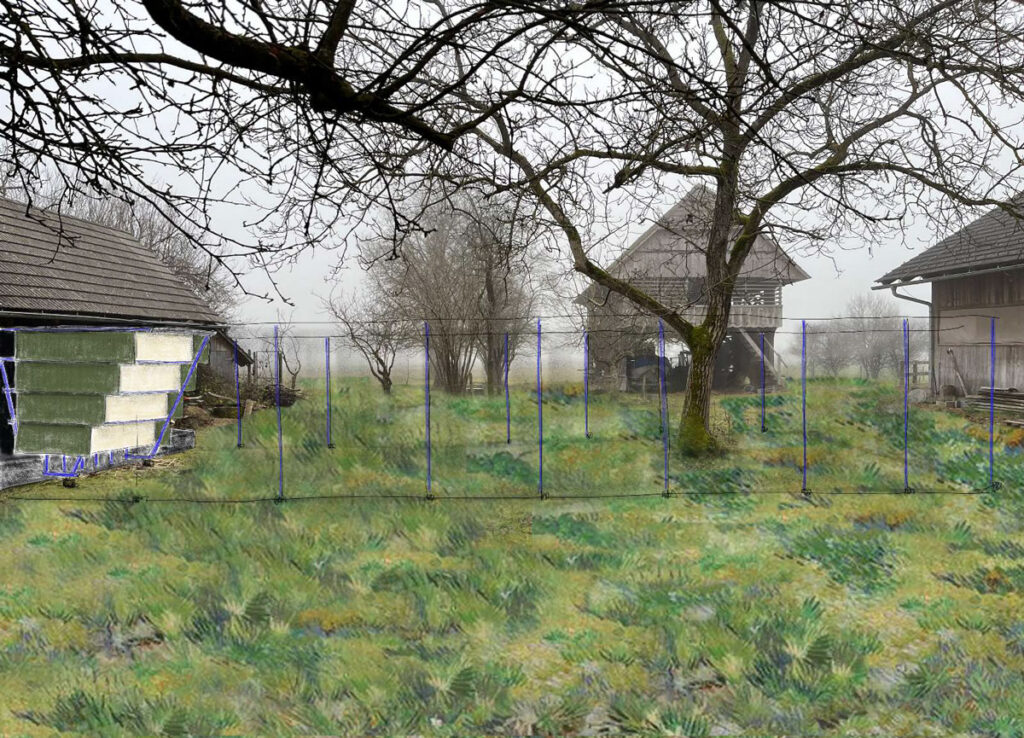
A particular value of the competition is also in the fact that the process does not end with the announcement of the results. The winning project will be built during the summer months as part of a workshop at the Centre for Earth Construction, allowing the architectural idea to be tested in both construction and use. This transition from competition proposal to material realization gives the competition additional weight and a tangible, real-world epilogue.
-

Celoletna naročnina
32.00€ Izberite možnosti Ta izdelek ima več različic. Možnosti lahko izberete na strani izdelka